
Santiago Cathedral
A special issue on the cathedral of Santiago de Compostela: its history, the Portico of Glory and its stone musicians, the façades and the interior.
A thousand years of stone
The cathedral’s story begins with a tomb. In the early ninth century, Bishop Theodemir of Iria identified a burial in the forest of Libredón that came to be held as that of the Apostle Saint James. King Alfonso II had a small church built there. A larger one followed, built by Alfonso III, which Almanzor destroyed in 997.
The cathedral we know today was begun in 1075, in the reign of King Alfonso VI and under Bishop Diego Peláez. Its first master builder was Bernard the Elder. Work moved forward under Diego Gelmírez, the first archbishop of Santiago, and Master Mateo completed it with the Portico of Glory. The cathedral was consecrated on 21 April 1211.
It is a great Romanesque pilgrimage church: a Latin-cross plan, three naves, an ambulatory around the altar and a gallery running around the whole building. On the outside, the Romanesque stone was wrapped during the sixteenth, seventeenth and eighteenth centuries in a Renaissance, Baroque and Neoclassical skin. That is why the cathedral has two faces: the medieval one inside, and the Baroque one facing the city.
A book and a road
In the twelfth century the Codex Calixtinus, the great book of the pilgrimage, was compiled in Santiago. It contains the liturgy of the Apostle, accounts of miracles, a guide for pilgrims and one of the oldest polyphonic repertoires in Europe. It is kept in the cathedral archive.
The cathedral is the goal of every Way of Saint James. Since 1985 the old town of Compostela has been a World Heritage Site.
In this special issue
We take the cathedral part by part, in entries that can be read on their own:
- The Portico of Glory: Master Mateo’s great work, arch by arch.
- The musicians of the Portico: the twenty-four elders and their instruments, with a video.
- The façades: Praterías, Obradoiro, Azabachería and Quintana, with the Holy Door.
- The interior: the high altar, the Apostle’s crypt, the organs and the botafumeiro.
- Who was Master Mateo?: what we know about the Portico’s author.
The cathedral is also part of our Sacred heritage route of Galicia, where it comes first.
Further reading
A. García Omedes: Catedral de Santiago de Compostela, in La guía digital del arte románico
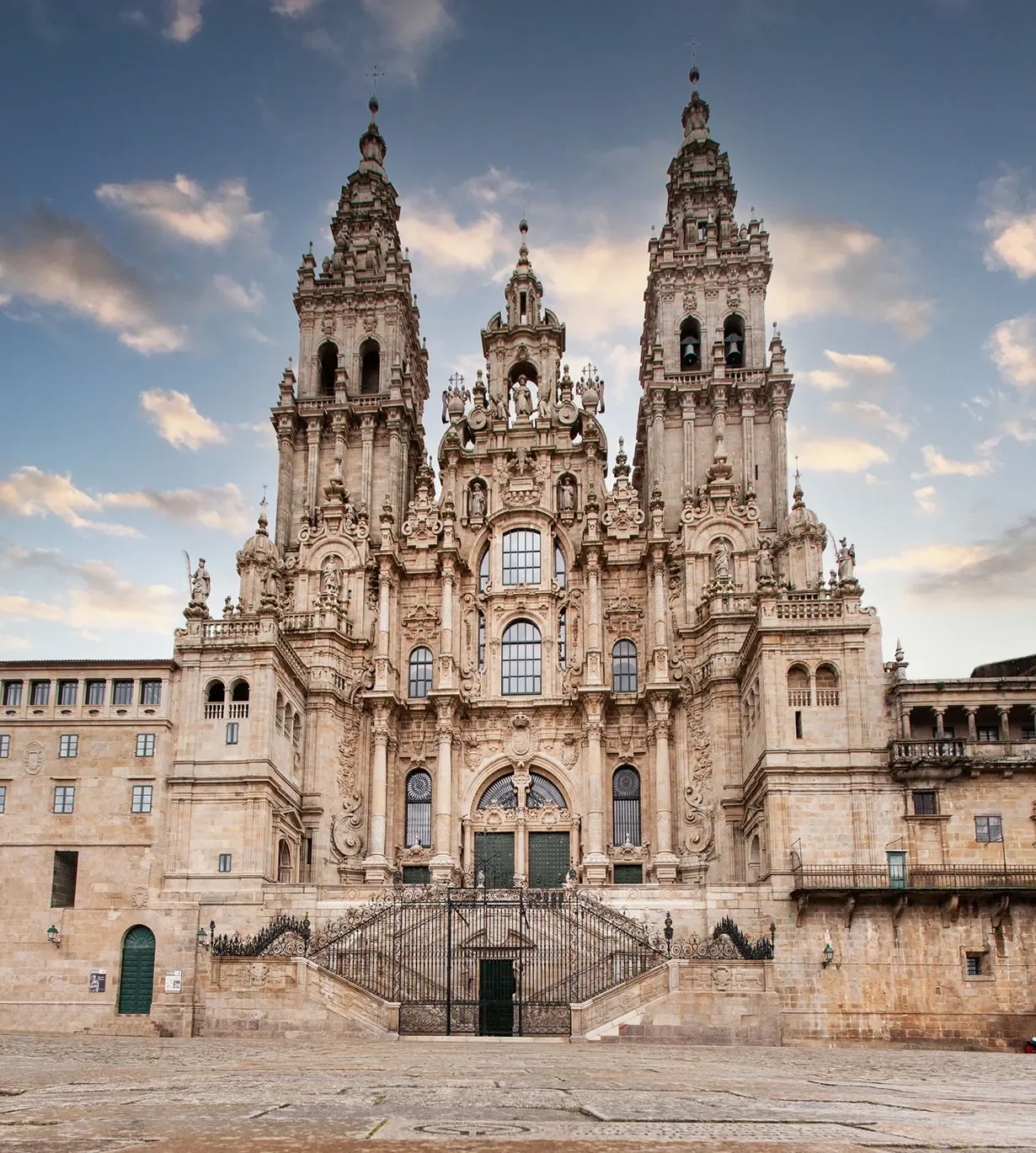
Magazine
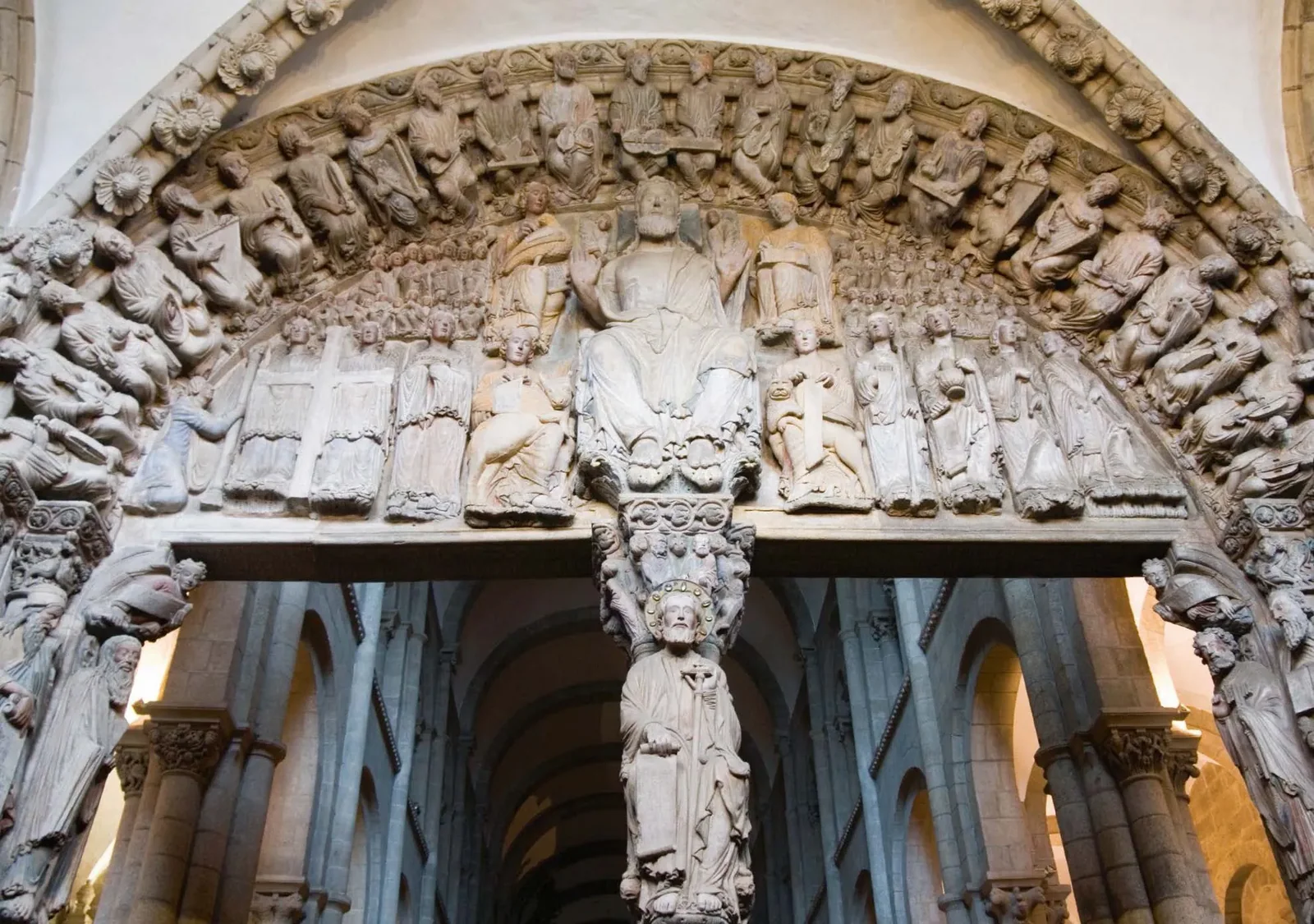
The Portico of Glory, arch by arch
More than two hundred figures carved in granite and marble tell the story of salvation, from the Old Testament to the Last Judgement. A guide to reading the Portico.
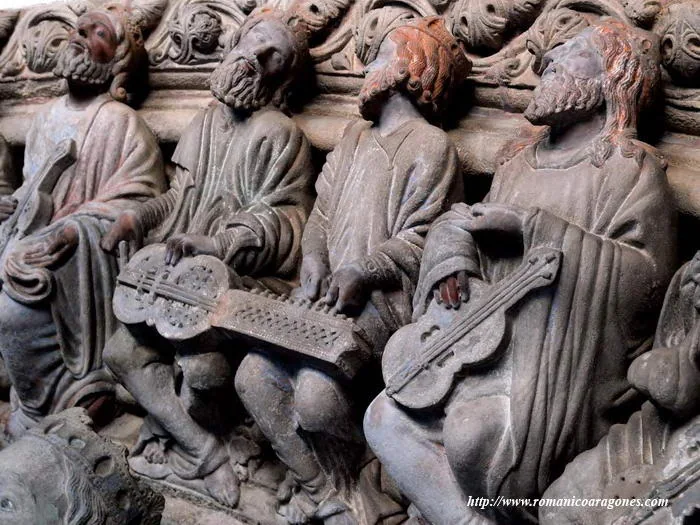
The musicians of the Portico
Twenty-four elders tune their instruments on the archivolt of the Portico of Glory. They are one of the most complete surviving images of medieval music.
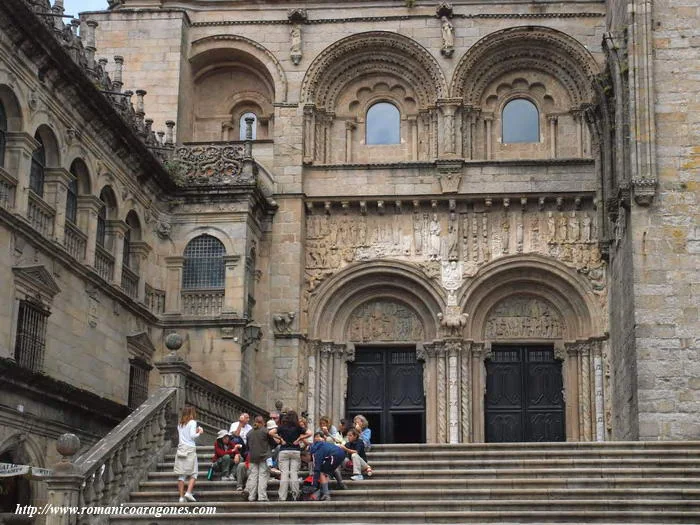
The four façades of the cathedral
Romanesque, Baroque, Neoclassical: each façade of Santiago Cathedral faces a square and tells of a different age. A walk around the building.
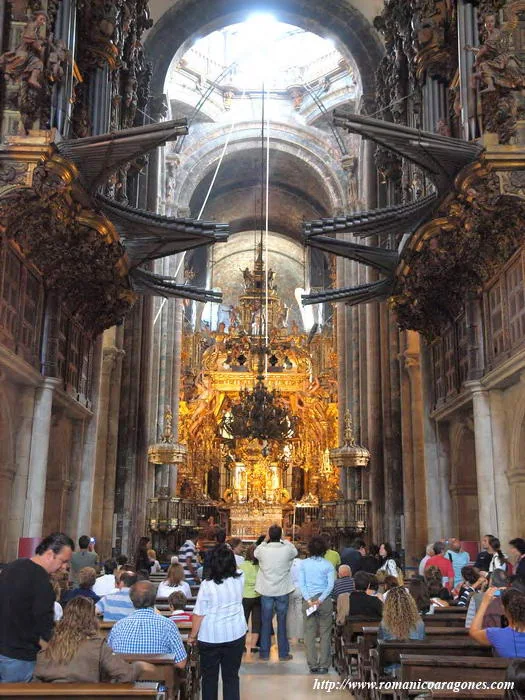
Inside the cathedral: the altar, the crypt and the botafumeiro
The Apostle's tomb, the Baroque high altar, two organs and a giant censer that flies above the pilgrims. A walk through the cathedral's interior.
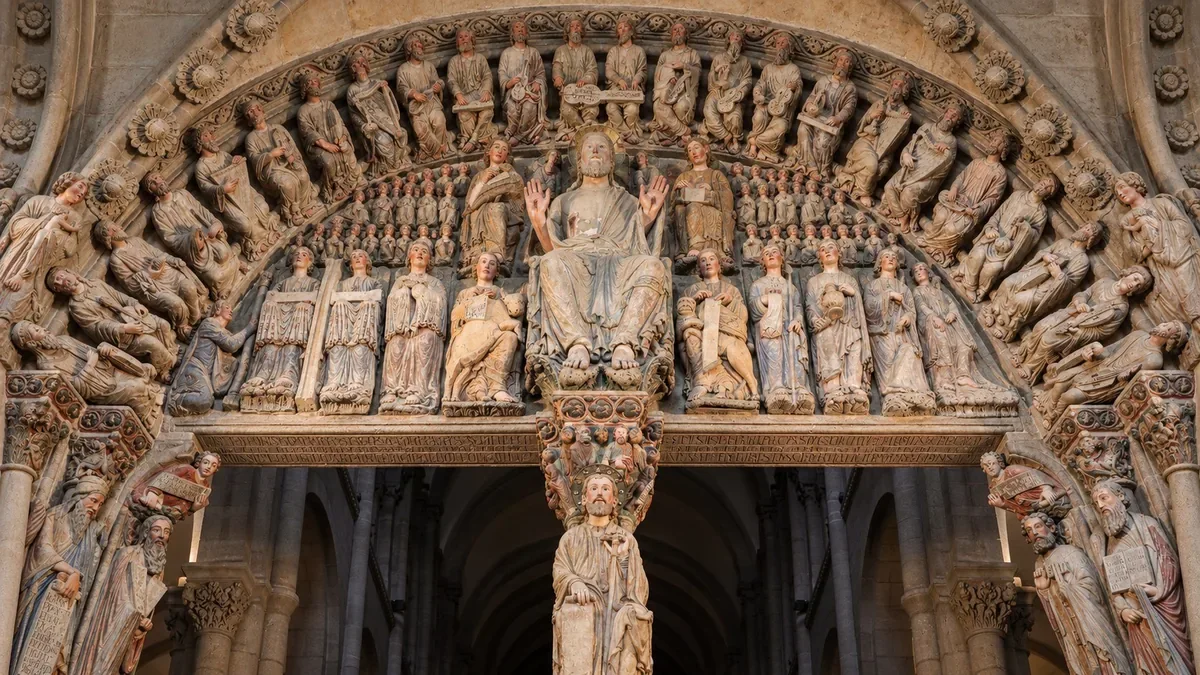
Who was Master Mateo?
The sculptor and architect who signed the Portico of Glory in 1188 gives our association its name. This is what we know about him, and what remains a mystery.