Inside the cathedral: the altar, the crypt and the botafumeiro
The Apostle’s tomb, the Baroque high altar, two organs and a giant censer that flies above the pilgrims. A walk through the cathedral’s interior.
On the outside, Santiago Cathedral is Baroque. Inside it is still Romanesque: the tall naves, the barrel vaults and the gallery running around the whole building date from the twelfth century. Medieval pilgrims could sleep in the cathedral, and the gallery let people move above the naves without disturbing the services.
The high altar
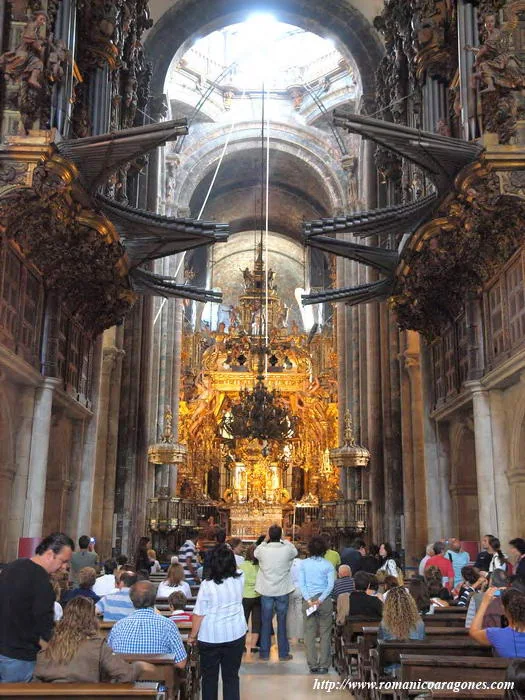
At the heart of the cathedral is the high altar, built over the Apostle’s tomb. In the second half of the seventeenth century it was covered with a great Baroque baldachin, designed in the time of Canon José de Vega y Verdugo and built under the direction of Domingo de Andrade. Gilded angels hold up the canopy, and at the top Saint James appears on horseback.
At the centre of the altarpiece is the seated figure of the Apostle, from the thirteenth century. Pilgrims climb a few steps behind the altar to give it the traditional embrace, one of the oldest rites of the pilgrimage.
The Apostle’s crypt
Beneath the high altar, a small crypt holds the remains attributed to Saint James and his disciples Theodore and Athanasius. They lie in a nineteenth-century silver urn.
The relics were hidden in the sixteenth century for fear of an English attack on the city, and their location was forgotten. They were found again in 1879 during excavations, and in 1884 Pope Leo XIII declared them authentic. The excavations also uncovered remains of the Roman mausoleum and of the first churches.
The organs
In the choir, above the naves, stand two large Baroque organ cases from the early eighteenth century, covered with angels and gilded ornament. They are a reminder that the cathedral has always been a place of music, from the polyphony of the Codex Calixtinus to the present day.
The botafumeiro
The botafumeiro is the most famous censer in the world. It is about 1.60 metres tall and weighs more than 50 kilos. It hangs from a rope above the crossing, and eight men, the tiraboleiros, set it swinging until it almost touches the vault. In flight, from one side of the transept to the other, it can reach almost 70 kilometres an hour.
Its use is very old: there are records of it as early as the fourteenth century. According to tradition, it began as a way to perfume the cathedral, where hundreds of pilgrims tired from the road gathered. The present one dates from 1851 and is made of silver-plated brass. It swings on the great feasts of the year and on other special occasions.
The Santo dos Croques
Behind the Portico of Glory, facing the altar, kneels the figure that tradition identifies with Master Mateo. We tell its story in Who was Master Mateo?.
Further reading
Santiago Cathedral · A. García Omedes: Catedral de Santiago de Compostela, in La guía digital del arte románico