Laboratorio de Formas
Galicia · Arxentina
- Period
- século XX
- Place
- Galicia · Arxentina
The Laboratorio de Formas was less a conventional institution than a project engine: it sought to recover memory and apply it to design, industry, publishing and museums.
The Laboratorio de Formas emerged in 1963 from dialogue between Luís Seoane and Isaac Díaz Pardo, strengthened by Díaz Pardo’s contact with Galician exiles in Argentina. Architect Andrés Fernández-Albalat joined soon afterwards. The project aimed to study historical Galician forms and carry them into contemporary production.
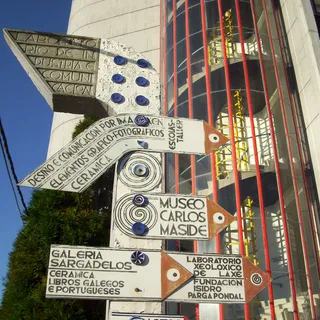
From this idea came decisive projects: the revival of Sargadelos, the Museo Carlos Maside, Ediciós do Castro and other structures devoted to information, research and memory. Its strength lay precisely in refusing to separate disciplines.
The Laboratorio formulated a modern idea of cultural identity: not to repeat old forms folklorically, but to understand and transform them in order to produce contemporary objects, buildings and institutions with recognisable roots.
Applied memory
The past is studied to generate new forms, not preserved as a static relic.
Interdisciplinarity
Art, architecture, ceramics, publishing, museums and industry participate in a single programme.
Institutions that produce culture
The aim was not merely to display culture, but to build structures capable of producing and transmitting it.
- 1963The Laboratorio de Formas is created
- 1964Sargadelos Ltda. is promoted
- 1970Sargadelos and the Museo Carlos Maside materialise two major strands of the project
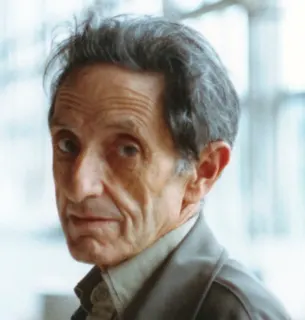

- Isaac Díaz Pardo · Álbum de GaliciaConsello da Cultura Galega
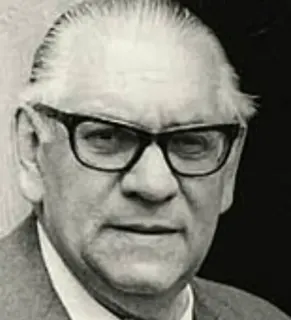
- Luis Seoane · Fundación Luis SeoaneFundación Luis Seoane
- Laboratorio de FormasIsaac Díaz Pardo · arquivo dixital
- Origin and formation of the Laboratorio de FormasIsaac Díaz Pardo · arquivo dixital
- Isaac Díaz Pardo · Álbum de GaliciaConsello da Cultura Galega
- Luis Seoane · Fundación Luis SeoaneFundación Luis Seoane