
Sargadelos
Cervo · Sada
- Place
- Cervo · Sada
Modern Sargadelos turned design, industrial ceramics and historical memory into one of the most recognisable visual identities of contemporary Galicia.
The modern Sargadelos project recovered the name and memory of the historic factories founded by Antonio Raimundo Ibáñez at the beginning of the nineteenth century. For Isaac Díaz Pardo, that lost industrial experience offered a way to connect local resources, design and identity.
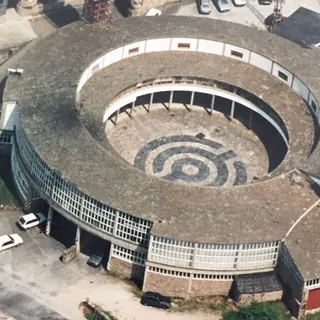
The Laboratorio de Formas made the revival of Sargadelos one of its first major objectives. Experimental production began in 1968 and the circular plant designed by Andrés Fernández-Albalat opened in 1970. White-and-cobalt ceramics became a widely recognisable cultural image.
The proposal was not simply to decorate objects with traditional motifs. Design was to study historical forms, popular art, manuscripts, architecture and avant-gardes and transform them into a contemporary industrial language.
Rooted industrial design
Visual identity grows from cultural research, not simple imitation of the past.
Architecture and production
Albalat’s circular plant turns the building itself into a manifesto for the modern project.
Brand and culture
Sargadelos functioned simultaneously as company, design system and platform for cultural dissemination.
- 1806The historic industrial story of Sargadelos begins
- 1963The Laboratorio de Formas formulates the modern revival
- 1968Experimental production begins
- 1970The circular plant of modern Sargadelos opens
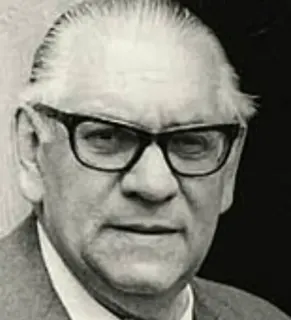
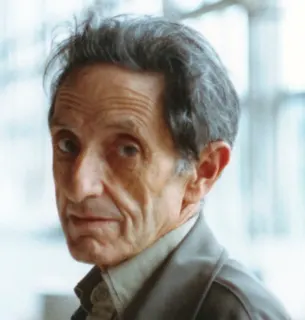
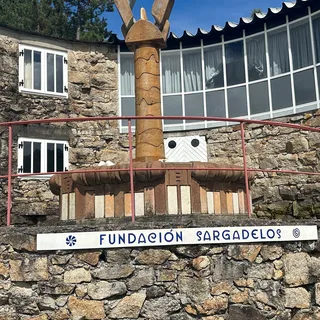
- Isaac Díaz Pardo · Álbum de GaliciaConsello da Cultura Galega
- The new SargadelosIsaac Díaz Pardo · arquivo dixital
- Laboratorio de FormasIsaac Díaz Pardo · arquivo dixital
- Isaac Díaz Pardo · Álbum de GaliciaConsello da Cultura Galega