
Eduardo Pondal
Poet · 1835–1917
- Born
- 6 February 1835 · Ponteceso
- Died
- 8 March 1917 · A Coruña
- Period
- século XIX
Pondal turned landscape, memory, myth and collective aspiration into a poetry that deeply shaped the symbolic imagination of modern Galicia.
Eduardo Pondal was born in Ponteceso in 1835 and studied Medicine in Santiago de Compostela. There he encountered an intellectual environment in which new ideas about Galicia, its history, language and the need for a modern culture capable of expressing them were taking shape. Medicine occupied only a brief part of his professional life: poetry became the centre of his activity.
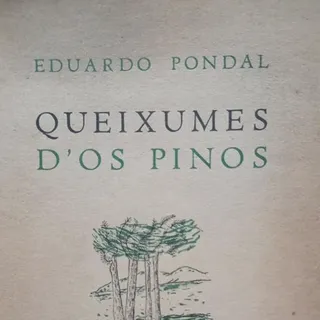
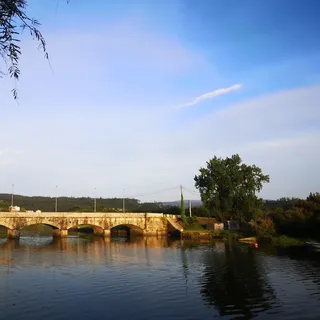
His writing built a distinctive world around Bergantiños, the river Anllóns and a Galicia reimagined through heroic, Celtic and classical references. This combination of concrete territory and myth made him the emblematic 'bard' of the Rexurdimento. In Queixumes dos pinos, published in 1886, this poetics reached one of its fullest expressions.
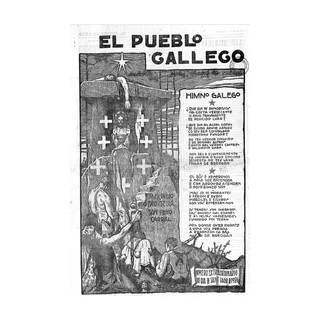
One of Pondal’s poems, Os Pinos, ultimately supplied the words of the Galician anthem, set to music by Pascual Veiga. This civic dimension explains part of Pondal’s extraordinary symbolic fortune, but his work is also a linguistic and formal laboratory seeking to raise Galician into learned, epic and highly musical registers.
Bergantiños as mythical territory
The real landscape becomes a poetic space charged with memory, place names and heroic resonance.
Language and poetic elevation
Pondal explores a literary Galician of high lexical, rhythmic and symbolic ambition.
Poetry and collective identity
His work participates in the cultural construction of a modern Galicia and a shared memory.
- 1835-02-06Born in Ponteceso · Ponteceso
- 1860Completes his medical degree · Santiago de Compostela
- 1886Publishes Queixumes dos pinos
- 1907Os Pinos becomes associated with the public premiere of the Galician anthem in Havana · A Habana
- 1917-03-08Dies in A Coruña · A Coruña
- Eduardo Pondal · Álbum de GaliciaConsello da Cultura Galega
- Eduardo Pondal · Wikisource[object Object]