Cantares Gallegos
1863 · poesía · Vigo
- Author / creator
- Rosalía de Castro
- Date
- 1863
- Genre / field
- poesía
- Period
- século XIX
- Place
- Vigo
The appearance of Cantares Gallegos in 1863 became one of the great landmarks of the Rexurdimento and restored Galician to a public literary presence of enormous symbolic reach.
Cantares Gallegos was published in Vigo in 1863 by Juan Compañel. Rosalía de Castro draws on songs and forms from oral tradition, but does not merely reproduce them: she creates a new poetic voice that transforms oral materials into written literature, combining celebration, irony, grief and social observation.
The book presents landscapes, customs, female voices, emigration, poverty and prejudice against Galicia. Its tone may be festive or popular, but also satirical and critical. This variety allows the book to work both as cultural affirmation and as a portrait of a society shaped by inequality and absence.
The date of 17 May, traditionally associated with the dedication and publication of the book, was chosen a century later for the Día das Letras Galegas. This continuity made Cantares Gallegos both a literary text and an institutional reference point in modern Galician culture.
Oral tradition transformed
Rosalía takes popular rhythms, stanzas and motifs and turns them into a literary architecture of her own.
A Galicia of many voices
The book does not offer a single voice: speakers, tones and perspectives alternate, with a notable presence of female voices.
Language, dignity and representation
Publishing ambitious poetry in Galician became an act of cultural recovery and public visibility.
- 1863First edition in Vigo, printed by Juan Compañel · Vigo
- 1872Second edition with additional poems
- 1963The centenary of the book becomes linked to the establishment of the Día das Letras Galegas
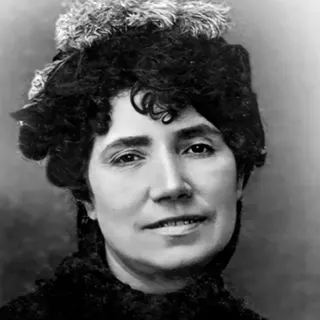
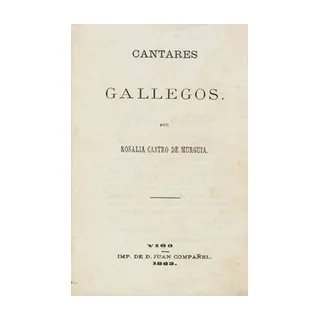
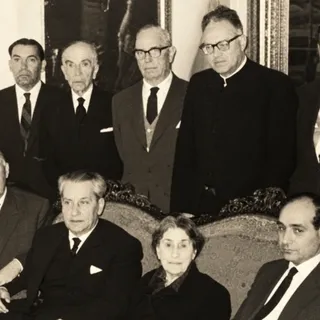
- Rosalía de Castro · Álbum de GaliciaConsello da Cultura Galega
- Cantares Gallegos · Biblioteca Virtual GalegaBiblioteca Virtual Galega · Universidade da Coruña
- Cantares Gallegos · facsimile of the 1863 editionConsello da Cultura Galega
- Cantares Gallegos · Proxecto EpístolaConsello da Cultura Galega