
Pórtico da Gloria
Catedral de Santiago de Compostela
- Period
- c. 1188–1211
- Place
- Catedral de Santiago de Compostela
The Pórtico da Gloria condenses architecture, sculpture, colour, represented music and visual theology into a single space, and is one of the major works of European Romanesque art.
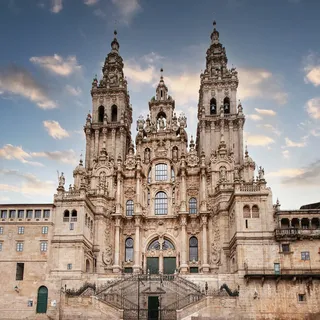
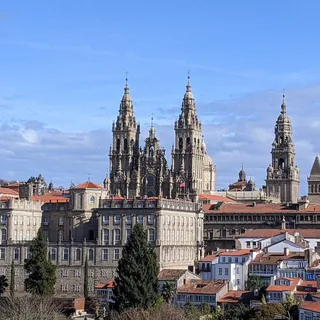
The Pórtico da Gloria was created under Master Mateo approximately between 1188 and 1211 as part of the cathedral’s western completion. It should not be understood in isolation: crypt, portico and tribune form a vertical reading, while the former exterior façade completed the monumental approach to the church.
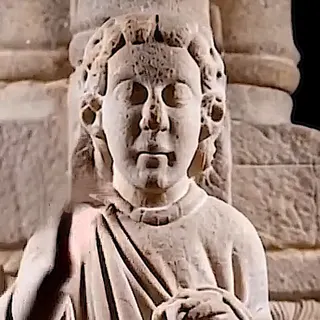
The sculptural programme is organised around an apocalyptic and salvific vision. Christ, apostles, prophets, angels, the blessed and creatures on the bases form an architecture of figures in which gesture, gaze and position are carefully coordinated. The instruments played by the twenty-four elders are also an exceptional source for medieval organology.
Over centuries the work lost much of its visible polychromy and underwent environmental and material change. The major research and restoration campaign carried out between 2010 and 2018 stabilised the ensemble and greatly improved understanding of its complex colour history.
An architecture of images
The figures do not function as independent sculptures: their meaning depends on position within the ensemble.
Music carved in stone
The elders’ instruments make the Portico an extraordinary source for studying twelfth-century musical practice and instruments.
Colour and restoration
Recent restoration made clear that the medieval experience of the Portico was chromatic, not one of bare stone.
- 1188The lintel inscription marks a decisive phase of the work
- 1188–1211Execution of the ensemble under Master Mateo
- 2010–2018Major modern research and restoration campaign
- 2019The restoration receives a Europa Nostra Award
- Pórtico da Gloria · Museo Catedral de SantiagoMuseo Catedral de Santiago
- The Mestre Mateo project · Museo Catedral de SantiagoMuseo Catedral de Santiago