
Catedral de Santiago de Compostela
Santiago de Compostela
- Place
- Santiago de Compostela
Santiago Cathedral is at once a shrine, an archive of centuries of art and architecture, and one of the major centres through which Galicia has been connected to Europe.
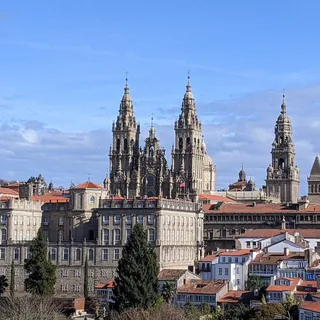
The cathedral of Santiago grew over the site associated with the tomb of the apostle James and became the destination of one of Europe’s great pilgrimage routes. The Romanesque building begun in the eleventh century was expanded and transformed over centuries, so the present ensemble overlays very different architectural and artistic languages.
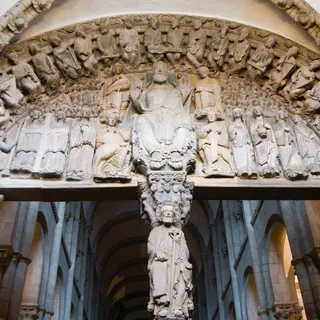
In the last third of the twelfth century, Master Mateo was commissioned to complete the western end. His project integrated architecture, sculpture and ceremony: the Pórtico da Gloria, crypt, tribune, façade and stone choir formed part of a single spatial conception.
The cathedral is not a static monument. Baroque alterations, restorations, liturgical changes, excavations and conservation campaigns have changed both its appearance and our understanding of it. This long history allows the building to be read as a palimpsest in which each period left a layer.
Pilgrimage and Europe
The Camino made Santiago a meeting point for people, artistic languages and traditions from across the continent.
A building of many centuries
Romanesque, Gothic, Renaissance, Baroque and contemporary interventions coexist within a single architectural organism.
Living heritage
Worship, tourism, research, restoration and cultural use keep the monument in continuous transformation and interpretation.
- século XIConstruction of the great Romanesque cathedral begins
- 1168Ferdinand II formally links Master Mateo to the direction of the works
- 1188–1211Master Mateo’s great western project is developed
- 1211Solemn consecration of the cathedral
- Álbum de Galicia · Consello da Cultura GalegaConsello da Cultura Galega
- The Mestre Mateo project · Museo Catedral de SantiagoMuseo Catedral de Santiago
- Pórtico da Gloria · Museo Catedral de SantiagoMuseo Catedral de Santiago