Mestre Mateo
Architect and sculptor · 12th century
- Period
- medieval
- Place
- Santiago de Compostela
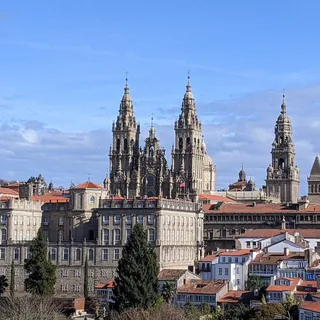
Mateo’s project was not an isolated work: it turned the completion of Santiago Cathedral into an architectural, sculptural, liturgical and symbolic programme of enormous influence.
Master Mateo is documented in 1168, when Ferdinand II granted him a life pension connected with directing works at Santiago Cathedral. From that point a project unfolded that did more than complete a building begun a century earlier: it rethought the western front, access, liturgical experience and the relationship between architecture and sculpture.
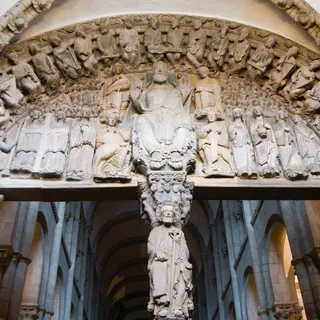
The Pórtico da Gloria, built approximately between 1188 and 1211, is the best-known part of this programme. Its iconography, expressive figures and integration with the crypt and western tribune reveal a unified spatial conception. Mateo’s workshop brought together artists of varied backgrounds and introduced solutions anticipating an increasingly Gothic sensibility.
The second major intervention was the stone choir, installed in the first bays of the central nave. Conceived as a true 'temple within the temple', it structured ceremonial use of the space and developed an iconographic programme related to Mateo’s wider ensemble. The choir was dismantled in the early seventeenth century, but surviving pieces have allowed its structure and importance to be partially reconstructed.
A total project
Portico, crypt, façade, choir and other interventions should be understood as parts of a single programme to complete and renew the cathedral.
Architecture, sculpture and liturgy
The meaning of Mateo’s works emerges from the integration of built form, sculptural programme and ceremonial use of the church.
Workshop and legacy
The work was collective under coherent artistic direction. Its impact continued in Galician sculpture and architecture over later centuries.
- 1168Ferdinand II grants Mateo a life pension for directing the cathedral works · Santiago de Compostela
- c. 1188–1211Execution of the Pórtico da Gloria and the great western programme · Catedral de Santiago
- c. finais s. XIIConstruction of Mateo's stone choir · Catedral de Santiago
- 1211Solemn consecration of the cathedral · Santiago de Compostela
- comezos s. XVIIDismantling of the stone choir; parts of it were reused or dispersed · Catedral de Santiago
- Mestre Mateo · Museo Catedral de SantiagoMuseo Catedral de Santiago
- O Pórtico da Gloria · Museo Catedral de SantiagoMuseo Catedral de Santiago
- O Coro / El Coro Pétreo · Museo Catedral de SantiagoMuseo Catedral de Santiago