Manuel Antonio
Avant-garde poet · 1900–1930
- Born
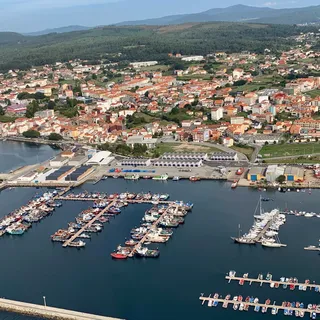
- 12 July 1900 · Rianxo
- Died
- 28 January 1930 · Rianxo
- Period
- século XX
In barely thirty years of life, Manuel Antonio brought Galician poetry into the European avant-garde and turned the sea into a radically modern poetic space.
Manuel Antonio Pérez Sánchez was born in Rianxo in 1900. During his years of study in Santiago he came into contact with Galicianism, the Irmandades da Fala and new literary currents. Very early he adopted a critical stance towards inherited rhetoric and towards the idea of a Galician literature limited to repeating earlier models.
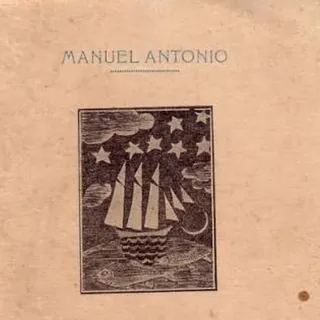
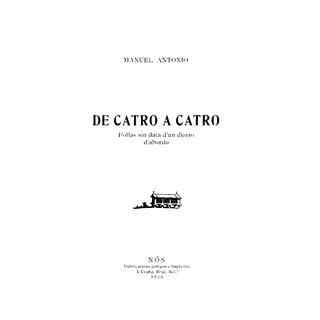
Maritime experience was decisive. He trained as a merchant-marine officer and sailed on different ships; in his poetry the sea ceased to be a romantic landscape and became a technical, fragmented and contemporary space. De catro a catro, published in 1928, organises this experience through a visual and verbal language close to the avant-garde.
His premature death in Rianxo in 1930 left a small but extraordinarily influential body of work. His aesthetic radicalism, the relationship between cultural nationalism and artistic internationalism, and the search for a new language made him an unavoidable reference for later Galician poetry.
The modern sea
Ships, coordinates, machines and horizon replace much of the traditional sentimental landscape.
Avant-garde and rupture
Typography, image and fragmentation are part of an explicit drive for renewal.
Galicia and internationalism
The defence of a distinct Galician literature does not imply isolation: Manuel Antonio imagines creation from Galicia in dialogue with the European avant-garde.
- 1900-07-12Born in Rianxo · Rianxo
- 1919Publishes some of his earliest Galicianist poems
- 1922Takes part in the manifesto Máis alá! with Álvaro Cebreiro
- 1928-03-27De catro a catro is published
- 1930-01-28Dies in Rianxo · Rianxo
- Manuel Antonio · Álbum de GaliciaConsello da Cultura Galega
- Manuel Antonio · Wikisource[object Object]