
Follas novas
1880 · poesía · Madrid · A Habana
- Author / creator
- Rosalía de Castro
- Date
- 1880
- Genre / field
- poesía
- Period
- século XIX
- Place
- Madrid · A Habana
Follas novas takes Rosalía’s Galician poetry towards a more inward, social and philosophical expression in which individual self and collective experience constantly intersect.
Published in 1880, Follas novas brings together texts written over a number of years and has a more complex and heterogeneous structure than Cantares Gallegos. Rosalía herself places the book in a zone of maturity and disillusionment: popular song frequently gives way to more reflective, dark and concentrated poetry.
The book addresses solitude, loss, time, desire, identity and suffering, as well as poverty, emigration and inequality. Some of its best-known poems construct a critical view of women’s position and of the human cost of Galician emigration.
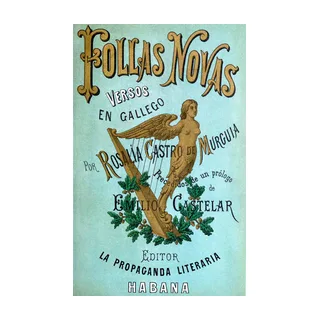
The first edition was connected to the Galician community in Havana, and Rosalía dedicated the book to the Sociedad de Beneficencia de Naturales de Galicia. This transatlantic dimension is significant: Follas novas speaks of a Galicia marked by departure while circulating through emigrant networks.
From inward life to collective experience
Personal pain and social analysis do not appear as separate domains; one frequently leads into the other.
Emigration and absence
Departure leaves gaps in families and communities and becomes one of the book’s great historical experiences.
Women’s condition
Rosalía gives particularly intense expression to inequalities, solitude and burdens placed on women.
- 1880The first edition is published with strong links to Havana · A Habana
- 1880The book consolidates the second great phase of Rosalía’s Galician poetry
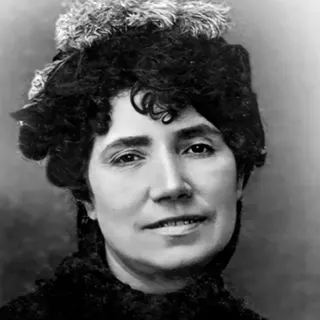
- Rosalía de Castro · Álbum de GaliciaConsello da Cultura Galega
- Follas novas · Biblioteca Virtual GalegaBiblioteca Virtual Galega · Universidade da Coruña
- Cover of Follas Novas · Havana edition, 1880Consello da Cultura Galega · Arquivo da Emigración Galega